Thursday, February 20, 2014

The Importance of Water

A lack of water can quickly cause dehydration and can have serious and sometimes even fatal results for your bird.

How long a bird can live without water can vary greatly among the different species, and can actually be as short as only a few hours for very small birds such as finches and canaries.  In our experience females tend to drink more water than males, breeding females require even more water, parents feeding babies need even more water, and older birds or birds with health issues may require even more access to water.


Using open water bowls have both pros and cons.  Many birds just love to splash around in their dishes and all that splashing and bathing can add needed moisture to their feathers, especially during dryer indoor winters.  Birds are also notorious for soaking their foods, especially pellets, in their water dishes preferring a softer food or creating that interesting birdie soup as we like to call it.   Unfortunately, the above fun activities also keep the humans trying hard to keep clean water in the dish.

Water bottles provide clean drinking water for our birds, but also take away the fun baths and soup mixtures.  If you prefer to use a water bottle instead of an open water dish, always always be sure your bird is drinking from the bottle before removing the familiar open dish.  Placing the bottle over the regular water dish may help your bird discover the bottle tube easier and give it a try quicker.

However even using a water bottle for cleaner water can present a serious problem when used in a cage with a bird who has learned how fun it is to shower under the water bottle tube, or how much fun it is to push seeds and other foods (and even a small toy part or two) up the tube.  Unfortunately all these fun activities for the bird, can result in an empty water bottle or a stopped up one that keeps water from your bird.  When using water bottles it is so very important to check at a minimum of once daily that the bottle is not stopped up, and contains plenty of water.  Never assume just because a bottle looks full, it is working properly.

Bacteria can also begin to grow within 24 hours even in a water bottle, so just because the bird has a water bottle instead of a dish, that does not mean the water does not need to be changed daily for freshness.    If you filled a glass with water and left it sitting out for 2 or 3 days, would you want to drink that glass of water, or would you prefer to pour it out and get a fresh glass of water?

Sometimes using both an open water dish, and a water bottle will provide fun, and clean water for your bird.    Also having extra bottles and/or dishes on hand can make changing out the containers quicker and easier, and help everyone provide fresh clean drinking water for their feathered friends.

For a selection of water bottles and dishes visit NatureChest.com

Monday, February 10, 2014

Dry Heat Making you Itchy?


If you are someone who suffers with dry itchy skin during the winter months when our indoor heat dries out the air, then you can well understand the need for some relief for the itch.

That dry indoor winter atmosphere often affects our feathered friends as well.  Most parrots are naturally rainforest creatures and are are more adapted for rainforest humidity levels than the average winter heated dry air home.

During the winter months our birds may often over-preen, molt excessively, or even pull out their own feathers, and it may be due in part to the dry skin itchiness of the indoor winter heated air.

There are a however few things you can do to help add some moisture back into our bird's environment and hopefully help relieve the itch at least a little.

 Shower PerchesMany people think warm spray baths or showers for our indoor birds during the winter is not a good idea as our homes may not be as warm as in summer months.  However skipping these baths can actually add to the dryness.  Just make sure the bath is early in the day so feathers have plenty of time to completely dry before evening temps lower.  If necessary you can let your bird preen and dry off in a heated bath area and once dry be moved back into their cage.

Adding a cool mist humidifier to your bird's room will also help add some moisture back into the environment and can be a big help in easing the itch.

Adding plants to your home also helps provide some humidity to the area.  Just make sure the plants are safe for your bird.

A really cool idea is to add a tabletop fountain to the bird's area.  You will be amazed at how fast the running water evaporates into the air as it adds much needed moisture.  So not only are adding cool moisture into the room, but the fountain will add the soothing waterfall feature for all to enjoy.

By adding one or more of the above suggestions to your winter routine, not only will your bird receive some of the extra humidity needed, but you may find the humans benefiting as well in the improved air quality.

Wednesday, January 29, 2014

Are you just a little Obsessed?

As many of us bird people will know, the word "obsession" is an interesting word and often applied to animal and parrot loving people.  Whether it is a true or false accusation, it is often well known by many of us.  

We are known as the bird lady, the cat lady, the dog lady, the hamster lady, and so on and so on.

I confess that I must own up to this parrot obsession on occasion.  I have been known to be obsessed with parrot things quite a few times in my life.  I am not limited to only the living feathery creatures, who chatter away in my birdroom, I truly love everything parrot.  I have parrot t-shirts, framed parrot art, figurines and statues, parrot pillows, salt and pepper shakers, and many other parrot things.  There seems to be this invisible magnet which draws me to anything parrot everywhere I go.

When remodeling and redecorating our home a while back, I brought home wallpaper border samples to share with my understanding husband who simply nodded and commented how nice they were.  As I'm sure you can guess, I had found beautiful parrot borders.  Two styles just perfect for 2 different rooms in my home.  What a pleasure to enjoy those happy cockatiels, beautiful cockatoos and vivid colored macaws whenever I entered the rooms.

I'm really not an eccentric parrot lady, I'm just a little obsessed.

The only time I can remember drawing a line across my obsession was when on vacation I found a lovely pair of blue and green budgies.  A lively looking pair sitting side by side with the quirky look only a budgie can give.  I excitedly picked them up, and yes I really did covet them a little.  My husband cocked an eyebrow and calmly stated "they are plastic you know".  Of course I knew, I had realized that fact immediately.  Obviously the non-bird husband did not understand the value of my find.  I can find lots of macaws, toucans, and cockatoos, but budgies, now budgies are rare.  I tried to explain this important point to him but he was stuck on "but they are plastic".  So admitting defeat, I gingerly set them back on the store shelf and forced myself to walk away with only one backward glance (well maybe two backward glances).

So my obsession and I trudge onward, adding a bit of "parrot" whenever I can.  I rationalize my obsession with the fact that I do not want to own every beautiful living species of parrot, so why can't I own at least an inanimate collection of them.

However, should I ever see a pair of beautiful blue and green budgies again, plastic or not, I bet I buy them without a second of hesitation.


Tuesday, January 21, 2014

Sometimes Simple is Better

Nuts for Knots Bird Toy Review

Who would have thought that by taking some multi-colored cotton rope and mechanically weaving it into a super tight knotted ball of colors, adding a chain and quick link, my Amazons and Cockatoos would have the most exciting toy challenge ever.

Simplicity at it's finest.  My Amazons and Cockatoos attack with gusto, my Greys are a little more delicate in their determination to unweave.  I was very surprised to see how much even my Sun and Jenday Conures also enjoy working on the rope knot.  Takes the smaller birds much longer, but the fact that it keeps their attention so long, makes it a winner in my book.

Selling for under $5, I would give the Nuts for Knots bird toy 5 stars and a big birdie foot up.


Monday, January 13, 2014

Rainy Parrot Morning

I really enjoy rainy mornings when I don't have to get out and go to work.

Hearing the gentle rain falling must also lull my birds and furry ones into a relaxed let's sleep in mood.
It's so calming for me and rare indeed, to be snuggled in the warm bed with the furry ones, and wake slowly to the gentle songs of the Tiels singing and whistling, and the much more quiet than usual chattering of the conures.

The larger parrots obviously enjoy sleeping in too.  No loud squawks from anyone this morning.

Well, that was until they heard me up and moving.  Then suddenly "silence was golden".

Thursday, January 09, 2014

How current are your emergency supplies?

With all the severe cold this week, and record breaking temperatures in my own southern area, evaluating all emergency rations and supplies are so very important.

For me Basic must haves for winter time emergency preparation:

1.  Flashlight and fresh batteries
2.  Sufficient number of carriers or small travel cages
3.  Water
4.  Extra food & treats for birds, cats, dog, and human
5.  Extra blankets in case of power outage
6.  Hand towel for catching bitey bird in possible panic mode
7.  Paper Towels
8.  First Aid Kit
9.  Emergency vet numbers

I actually have several flashlights placed throughout my home for emergency situations for any time of year.  I make sure one is always located just inside the door to the bird room.

I have multiple small carriers, and a few small sleep or travel cages stored.  I allot 2 small crocks per carrier or cage and either store the dishes with the carrier, or have a bag containing extras stored in the carrier area.

For water, I recycle plastic milk jugs by cleaning them, letting them completely air dry, and then filling with drinking water and placing in my large freezer.  If you are not lucky enough to have a separate large freezer, or even much room in your refrigerator freezer, keep at least one case of purchased bottled water on hand for immediate emergency use.   Although some birds such as cockatiels can do just fine without water for a couple of hours, other birds, especially birds such as canaries, cannot go without water for more than a very short period of time.

I keep an an extra bag of seed or pellets, or combination of both, either in my freezer, or in air tight containers.  I also like to keep some treats such as spray millet, nutriberries, etc. on hand for an emergency occurrence.  After placing a bird into their carrier or small cage, the treat helps them focus on something good and not worry about why they are in the emergency housing.

I also keep extra dog and cat food on hand as well as some treats.  Keeping some granola bars and such on hand for myself, helps me feel better prepared and part of the team.

Those blankets, quilts, large towels, and such, are an absolute necessity as they can be spread across carriers, cages, to help hold in heat and provide a more quiet and darkened atmosphere to help relieve stress on the birds.  Not to mention, wrapping up in a nice warm fleece blanket with the dog, would help relieve my own stress level.

I always keep a small towel handy in the bird room for use any time needed.  Some of my rescued birds are not super tame, and would not willingly step up and go quietly into a carrier.  To prevent stress to these birds, I can easily scoop them up with a towel, deposit them into the waiting carrier, and give them their treat.   No fuss no muss with trying to coax an unwilling bird to cooperate with my idea of what needs to happen.

Paper towels can be used in the bottom of the carriers for easier cleanup, not to mention it definitely gives some of my birds playtime while they shred and demolish the paper towels.

My first aid kit includes not only bird related necessities, but a few extras for me as well.

Emergency vet numbers on hand in my first aid kit just in case.

I have a closet that is designated the bird closet as it houses the carriers, and a stack of extra blankets and covers.  I also keep bird safe unscented candles on hand.  When using candles, always be sure they are safe to be used around your birds.  Wonderful fragrant smelling candles, are generally not safe to use around your birds.  Simple plain wax candles are preferred.  Extra safety whenever using open flames such as candles, of course, should be considered.

Luckily, our recent winter blast brought no power outage, and birds were all snug in their own cages.  All other critters, including one green tree frog, knew no worries at all.


Monday, January 06, 2014

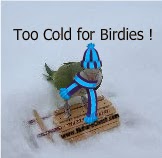
A little Birdie told me it's cold outside

My "birdroom" is a sunroom addition that was added many years ago.  In the spring and summer, and even the fall, the birds can enjoy the plentiful sunshine with two walls of windows, and a third wall of ceiling to floor glass.  They enjoy watching the outside wildlife, and screaming their parrot warning when a wild flock flies by.  They enjoy the fresh air as well (even though I doubt the neighbors within hearing distance enjoy them enjoying).

Unfortunately, in the winter, the room can be not quite so enjoyable.  On colder than normal freezing days and nights the room is quite chilly.  Although all glass windows have mini-blinds to help keep the cold out, as well as a sheet of winterizing plastic on the outside, the room is still colder than the rest of the house. 

So to prepare for our 5 degree  temps expected tonight which really are unheard of in the south, I have placed an extra layer of blankets on the backside of all cages near windows.  Cages that can be moved, have been brought toward the center of the room as well.  However the larger flights have extra blankets hung down the side near glass as they cannot be moved so easily.  

Although the bird room shares the house's central heating and cooling system, 2 extra oil filled bird safe radiators will be strategically placed in the sunroom for extra heat for the birds.  The birdroom door into the main house will be left open with a closed screen door to keep the kitties with curiosity out of the room.

I also have plenty of small carriers should the power go off, and everything needed to fire up the wood burning fireplace.  I have already had it inspected and a couple of trial runs with the fireplace this winter to make sure everything is in working order.  Flashlights, extra water saved, plenty of bird food, cat food, dog food, and human rations on hand.  If worse case scenario occurs, the birds, the cats, the dog, and their human can camp out temporarily in the roomy den.

So bring it on Old Man Winter, we are prepared.  I was a Girl Scout you know, so I'm always prepared, well almost always. 

Sunday, January 05, 2014

Over Easy

My bird room this time of year is a hot bed of parrot hormones in chaotic overdrive.

Uncovering the cockatoo cage can uncover more than just a couple of white birds during the winter months.

Today's find was an almost perfect cockatoo egg sitting among the leftover bird pellets in the food dish.  Almost perfect I say as of course there was a slight chunk missing or how else would one of them picked it up and deposited it in the food bowl.

The cockatoos are both female and I have suspected for years they not only share the brooding of their egg, but also take turns on who is the one delivering the egg during the breeding cycle.  They are careful never to have more than a single egg to care for.  If one breaks and falls through the grate, a new one may show up a few days later, but never two.  Although they take turns rolling their egg around, they also sit side by side with it at times.  However the gentle care of the egg occurs only when there is not yummy food in the dish to munch on, or toys to play with, or the daily screaming match with the amazons.  Yes they are both good mommy material, when it suits their mood.

I'm not sure if the message to their human this morning was "hey this thing is broken, we need a replacement asap" or simply "we are tired of sitting on it in the bottom of the cage, time to throw out the old with the leftover food."

Either way, time for this little egg to go.  Of course there is no way to know if a new one will magically appear in the bottom of the cage in a few days.


Saturday, January 04, 2014

Saturday Fruit Salad

Today's Saturday Fruit Salad includes some banana, apple, and orange chunks.

I always peel my apples to be sure no wax, or pesticides are any longer present. Apples are a great help with my older birds who may have a little trouble digesting all aspects of their food.

Apples are high in fiber and are a natural laxative and digestive aid for all parrots, but especially older birds.  They have many other nutritional stars and almost all of my birds just love them.  Doesn't matter if they are red or green, apples are a favorite always.  Even my finches and canaries from days long ago, enjoyed a bit of apple so don't think fruit is only for the larger birds..

Bananas are also a fav of almost all of my birds, especially the larger parrots.  I think they enjoy the mushiness of the ripe bananas.  Most of mine do not like the firmer bananas as much as the softer well ripened ones.  Which works out well because I don't particularly care for the over-ripened ones so those are always given to the birds.  Bananas are chock full of natural goodness too.

I once attended a seminar given by a very well known Avian Vet who stated feeding your bird a piece of orange once a week, would help prevent yeast infections naturally.  I can't affirm if this is 100% true, but my birds love the juicy sweetness of oranges, and I personally have not had a bird with a yeast infection in many years.  Because of the acidity, I do not feed them daily, but oranges too are full of natural healthy sunshine.

It is absolutely amazing how quiet the bird room becomes immediately after the fruit salad is served.

Beaks full of yumminess, no time for squawking right now.

What's in your fruit salad today?


Tuesday, May 31, 2011

Does your bird need a little fresh air?

Question: Is it safe for a parakeet to go outdoors in a cage?


Answer: Some birds really enjoy going outdoors for a little fresh air and watching all the exciting activities of the outdoors.  Who doesn't love some fresh air and sunlight every once in a while.  However, some birds may become very frightened if taken outdoors, so please be sure your bird will enjoy the outing.  If your bird is not used to the outdoors, you may want to start with only a few minutes outside, making it a fun time with lots of praise, and increasing the time outdoors as your bird becomes more adjusted to all the sights and sounds.


Often people prefer to take their bird outside in a cage to keep the bird safe, rather than using a harness.  You will need to make sure all openings on the cage such as openings for feed cups, are securely fastened, just as the door should be, making sure your bird does not escape the cage.  We strongly recommend a bird never be left outdoors by itself.  If your yard is not fenced in, you can never be certain a stray dog might spot your bird and even if only curious, could cause an unfortunate accident happening to your bird.  Even a fenced in yard won't guarantee a wandering cat won't see your bird and try to reach it.  There have even been cases of snakes crawling into cages, so a bird can never be too safe if left alone.  


Also consider the daily temperatures and make sure they are comfortable for your bird.  A bird should never be left in the sun to prevent overheating and possible death.  A bird that has become too warm will often hold it's wings out to try and circulate air around it's body to try and bring the temperature down.  Your bird may also breathe with an open mouth and if this occurs, should be taken back indoors to cool down immediately.  There should always be the choice of shade so your bird can move in and out of the sun when it is ready to.  Just remember if you live somewhere where 90 degrees in the shade is miserable for humans, then it's going to be too hot for your bird for more than a few minutes.  


Just like humans, a bird can get used to the cool air conditioning of a home and might be better with only short fresh air trips before or after the hottest parts of the day, and be sure when your bring your bird back inside there are no direct air vents blowing on the bird.   


So by all means, do enjoy some fresh air with your bird!

Friday, April 22, 2011

It's All About the Beak!

A parrot's beak is a very fascinating part of what makes a parrot a parrot.  Parrots use their beaks to help them climb, to open the smallest seeds, or the hardest nuts, to preen their feathers, to clean their toes, to feed their mates, to feed their own baby parrots, to give their humans gentle kisses, and of course to nip or bite at something they fear or something that simply makes them irritated.

Beaks are often used for climbing and can almost seem like a parrot's third foot as they can use their powerful beaks to hoist themselves up their play gyms and cages, or even to just hang by their beak as they swing from their toys.  Have you ever watched a parrot climb a ladder?  The beak makes climbing around so much easier for them.  They often use their beaks to help steady the finger or hand that reaches out to them as the first part of stepping up. 

Those powerful beaks can be used to gently open the smallest seed to get at the wonderful nutrition inside.  Ever watched a parrot close up picking up a seed, moving it around with their foot and their beak to get it situated to just the right spot for opening? Then using the foot, beak, and tongue, in unison they pry open the hull for the goodness inside.  Or, just watch one of the big parrots rotating a big walnut to just the right place before cracking that hard nut as if it were made of the thinnest of shells.  Then picking out the meat of the walnut with the tips of their beaks to make sure every little nugget of nutmeat is devoured.

Watch closely as your bird preens its feathers using the beak as a precision tool made for preening.  Taking each feather with great care and running it through the beak removing all dust and debris for perfect feather condition.  No matter if its the tiny downy feathers that must be gingerly removed, or the longest of the long tail feathers, that beak is the perfect tool for parrot preening and sharing the job with another feathered friend can be great fun too. 

If you have ever been lucky enough to watch parrot parents feeding their young, it is the most touching of all.  Although the parent beaks are huge compared to the tiny little babies, they are able to deliver food to their babies with the greatest of ease with no harm at all to the babies.  The parents also use their beaks to gently nudge the babies into the perfect position under their adult feathers to keep them as warm as needed.  To watch the gentleness of an adult parrot with it's young is wondrous indeed.

But you may ask, what is this remarkable parrot beak made of?  A beak consists of keratin which is the same material your fingernails contain.  However, unlike a fingernail, a bird's beak also contains blood vessels and nerve endings.  Therefore a bird's beak is very sensitive to touch and also to injury.  Some birds love to have their beaks gently rubbed by their favorite person, and some tend to be beak shy because the beak is so sensitive.  A parrot's beak continues to grow all throughout a bird's life and in nature, birds are busy wearing the extra growth down with natural tree branches and foraging for their food.  If you have a pet bird, you need to provide lots of wooden toys of different textures, both soft and hard wood, and possibly other materials, to help prevent over-growth of the beak.  So you see those wooden bird toys your bird buzz saws through are as much a necessity for your parrot as any vitamins you might provide for a healthy bird.  Bird beaks can be gently filed down if needed, but should only be done by someone who knows what they are doing as the beak can be damaged permanently by inexperienced groomers.  Beaks should never be cut by anyone other than a vet or experienced bird groomer. 

If your bird's beak overgrows even with lots of toys and chew items, you may need to have your bird checked thoroughly by your avian vet to be sure there is not a health reason for the overgrowth.


Monday, March 28, 2011

Update on Japan Emergency Assistance

The following is a Press Release we have received concerning the emergency situation in Japan concerning zoos and aquariums that also may include parrots.

World Association of Zoos and Aquariums (WAZA) Zoos and aquariums affected by earthquake and tsunami in Japan

WAZA organizes the “Donate for Japan” emergency assistance operation Gland, Switzerland (March 15th 2011):After the earthquake and tsunami that has affected the North of Japan on March 11th, WAZA is joining forces with its Japanese regional association (JAZA) and its member institutions to help the zoos and aquariums in the North of Japan.
 
"After the horrible earthquake and tsunami in Japan, WAZA is trying to provide financial support for emergency assistance. The most   affected zoos and aquariums urgently need help in order to protect staff and save animals", says Gerald Dick, Executive Director of WAZA - the World Association of Zoos and
Aquariums.

Huge damages happened in the northern part of Honshu island. Some affected zoos and aquariums are suffering from shortage of gas, fuel for heater, food and drinking water for both humans and animals.

Some aquariums in Tohoku area (north part of Honshu Island) have been heavily affected by the earthquake.

Sendai Marinpia Matsushima aquarium was completely-flooded but there was miraculously no human damage.

Sendai Yagiyama Zoo estimates a shortage of feeding stuff. The power is out in Sendai city. JAZA is considering concrete measures to send feeding stuff to Sendai Yagiyama Zoo.

The power is also out at Akita Omoriyama zoo, Morioka Zoo, Asamushi aquarium and Hitachi Kamine Zoo.

Fukushima aquarium will move their sea mammals and birds to Kamogawa Sea World.
 
"It is most important for us to secure the adequate means of transport. And we have started a drive to collect donations from the public." says Kazutoshi Takami, Zoo Veterinarian at Osaka Municipal Tennoji Zoological Gardens.

WAZA is now organizing the cooperation and support for the disaster-affected institutions by collecting donations through its website. Click on the "Donate for Japan"

[ http://www.waza.org/en/site/get-involved/donate-for-japan ] button on the WAZA
homepage and help us support JAZA.

Friday, March 18, 2011

Teaching Your Parrot to Talk

Customer Question: How can I train my senegal parrot,to speak?

Answer: Although all parrots have the ability to speak as we do, not all parrots do so. Some species are known to be better talkers than others as well. Lots of patience is necessary, as well as understanding that parrots like to repeat words they hear often, or hear with great emphasis. Such as your bird suddenly repeating the no-no word you yelled out when you dropped that book on your toe the other day. The way you say a word is often more important than what you say. For example saying 'hello' every morning to your bird might be rather uninteresting, but a great big happy "HELLOOOOO" should catch your bird's interest and maybe tempt him to repeat it back to you.

For more information on some of the better known species for talking, as well as additional information check out our full article by clicking "HERE".

Saturday, March 12, 2011

Why Does My Bird Scream?

This question is asked by many bird owners.  Since there are many different reasons why a bird may be more vocal than normal, a close look at health, environment, past history, and behavioral problems would be in order.  Also remember what is a loud noisey parrot to one person, may be a very quiet bird to another.  Noise is definitely relevant to each individual.  A macaw yelling out the excitement of the day is loud to me, a budgie not so much.  Yet often I hear owners who bought a parakeet at the local pet store complain about how they had no idea that bird was going to make so much noise.  Hmmm, obviously their personal noise level is much lower than mine.  Some even think a finch is a noisey little critter.

The difference sometimes is not actually the volume level, but the noise repetitiveness.  Budgies and finches chatter and sing pretty much all day if they are happy and well taken care of.  It's sometimes the fact that they are always going vocally that makes them noisey to some people.  It's not that they are actually loud.

If you live with birds there is going to be some noise, loud or constant, for most humans.  You can adjust your noise tolerance, try and adjust the bird's noise level if it's too loud, or just learn to live with it if you love your bird.

For more information check out Why Does My Bird Scream?

Wednesday, February 02, 2011

Cockatiel with Dry Itchy Skin


CUSTOMER QUESTION: I have a cockatiel about 6 years of age. She has been flaking & pulling feathers out. My question is can you recommend anything for my cockatiel? It is cold & I don't want to spray her with chemicals or with water with the cold temps. Just wondering if you have any ideas.

RECOMMENDATIONS: Many birds are molting during the fall and winter months of the year. Often when the heat is turned on in our homes, it can cause a prolonged molt as well as some dry itchy skin on many birds as the heat dries the air out. Since cockatiels tend to have a lot of feather dust anyway, winter can seem to add even more dust from them as their feathers can become dryer and in turn seem increase the amount of feather dust.

Dry itchy skin is caused more often in the winter months due to inside heat drying the air out. This can in turn sometimes cause birds to over-preen the feathers or even pull some out as they try and relieve the itchiness. If you have ever had a bad case of dry itchy skin in the winter I'm sure you can relate to the uncomfortable feeling.

Adding a cool mist humidifier to your bird's room, or even a small tabletop water fountain can help in adding much needed moisture back into your bird's environment. Even in the winter months you can lightly spray your bird with warm water in a fine spray mister. Just be sure to spray your bird early in the day so there is plenty of time for all the feathers to dry out before bedtime. Make sure your bird is not in any drafts and you may want to only lightly spray your bird if your household inside temperature is below 70 degrees. Even an occasional light misting will help with adding some moisture back to the feathers.

If you would like to add something extra to your bird's diet during this time, you might want to try Missing Link as we find it to be a very good product for birds who are molting, under stress, or have other health issues.

A little extra moisture in your bird's environment can go a long way to help with dry itchy skin and feathers, and the often seen over-preening of feathers in the winter season.

Saturday, January 08, 2011

Are You Ready for the Snow?

As we sit here waiting for the impending doom of lots of snow and ice the weather forecasters are predicting for our area, we realize that winter weather emergencies should be prepared for way before necessary, or you will be one of those standing in long lines trying to grab the last of the emergency items needed.

Living in the south, a few inches of snow and the least bit of ice can shut down pretty much everything.  Only the very brave (or very dumb) are usually willing to venture out onto the icy roads with all the crazy drivers slipping, sliding, and spinning around often making a bad situation even worse.

Here is a list of some items you should have on hand just in case you are snowed in for a few days.  Be prepared also in the event you may loose your power from icy power lines or falling tree limbs.

Emergency items to have on hand for your bird:
Extra Seed, pellets, dried fruit/vegie
Emergency Avian First Aid Kit
Carrier
Warm blanket or quilt to cover the cage
Tear up toys

Other items good to have on hand:
flashlight & extra batteries
warm blankets or quilts for the humans
bottled water
hot snap hand warmers (optional)

Many people keep extra bird food in their freezer and rotate it out as needed so they always have some extra on hand for emergencies.  A very good idea.

If you lose power you will need that flashlight, but make sure the light from the flashlight does not frighten your bird as it will be an unknown moving object to your bird.

If you lose your power and have electric heat, placing a blanket or quilt over your bird's cage can help keep your bird's environment warmer.  If you are forced to use a fireplace for heat, you may need to place your bird in a carrier and bring into the room that is heated.  In that case, a nice tear up bird toy may help keep your bird occupied and busy while in the carrier.

VERY IMPORTANT! - Never use Kerosene heaters around birds as the fumes may be toxic and can kill your bird.

Our research on the use of propane or butane heaters seems 50/50.  Many experts say do not use either around birds, and some bird owners say they have used them with no ill effects on their birds.  One source stated that butane is not a highly toxic gas and can be stored inside your home.  Whether that means you can also use it safely in your home is unknown.

Propane or butane heaters used without adequate combustion or ventilation may give off excessive carbon monoxide which is an odorless, poisonous gas, deadly to birds, and even humans. Early signs of carbon monoxide poisoning in humans are similar to flu-like symptoms, including a headache, dizziness, and nausea.

We would suggest it is better to be safe than sorry and to not use either if possible, but if you to have one as your only source of heat in a severe emergency, please ventilate the area well to help protect your bird as well as yourself.  We highly recommend you do your own research into these methods of supplemental heating as well as gas burning fireplaces.

A gas burning fireplace is considered unsafe by many if you own birds.

If you are using a wood burning fireplace for heat, make sure your room is well vented as well and no smoke is coming into the room where your bird is.  Before winter sets in it is best to make sure your fireplace is clean and free of creosote and any leftover nesting materials by any birds who may have set up housekeeping in the chimney over the summer.

So most important items include extra dry food, water, blankets, carrier, and flashlight.

Stay warm, stay safe, and stay inside if you can.


Tuesday, December 14, 2010

My Parrot's 12 Christmas Wishes

On the 1st Day of Christmas my parrot said to me, I'd like a Treat Petite from Gold-en-feast;

On the 2nd Day of Christmas my parrot said to me, I'd like 2 Boredom Busters and a Treat Petite from Gold-en-feast;

On the 3rd Day of Christmas my parrot said to me, I'd like 3 Calypso Stackers, 2 Boredom Busters, and Treat Petite from Golden-en-feast;

On the 4th Day of Christmas my parrot said to me, I'd like 4 Sleepy Teepees, 3 Calypso Stackers, 2 Boredom Busters, and a Treat Petite from Gold-en-feast;

On the 5th Day of Christmas my parrot said to me, I'd like F-i-v-e Blin-ky Balls, 4 Sleepy Teepees, 3 Calypso Stackers, 2 Boredom Busters, and Treat Petite from Gold-en-feast;

On the 6th Day of Christmas my parrot said to me, I'd like 6 Polly Pirates, F-i-v-e Blin-ky Balls, 4 Sleepy Teepees, 3 Calypso Stackers, 2 Boredom Busters, and a Treat Petite from Gold-en-feast;

On the 7th Day of  Christmas my parrot said to me, I'd like 7 Nuts for Knots, 6 Polly Pirates, F-i-v-e Blin-ky Balls, 4 Sleepy Teepees, 3 Calypso Stackers, 2 Boredom Busters, and a Treat Petite from Gold-en-feast;

On the 8th Day of Christmas my parrot said to me, I'd like 8 Soak & Simmers, 7 Nuts for Knots, 6 Polly Pirates, F-i-v-e Blin-ky Balls, 4 Sleepy Teepees, 3 Calypso Stackers,  2 Boredom Busters, and a Treat Petite from Gold-en-feast;

On the 9th Day of Christmas my parrot said to me, I'd like 9 Pacifiers, 8 Soak & Simmers, 7 Nuts for Knots, 6 Polly Pirates, F-i-v-e Blin-ky Balls, 4 Sleepy Teepees, 3 Calypso Stackers,  2 Boredom Busters, and a Treat Petite from Gold-en-feast;

On the 10th Day of Christmas my parrot said to me, I'd like 10 Bitty Bagels, 9 Pacifiers, 8 Soak & Simmers, 7 Nuts for Knots, 6 Polly Pirates, F-i-v-e Blin-ky Balls, 4 Sleepy Teepees, 3 Calypso Stackers,  2 Boredom Busters, and a Treat Petite from Gold-en-feast;

On the 11th Day of Christmas my parrot said to me, I'd like 11 Swings a Swinging, 10 Bitty Bagels, 9 Pacifiers, 8 Soak & Simmers, 7 Nuts for Knots, 6 Polly Pirates, F-i-v-e Blin-ky Balls, 4 Sleepy Teepees, 3 Calypso Stackers,  2 Boredom Busters, and a Treat Petite from Gold-en-feast;

On the 12 Day of Christmas my parrot said to me, I'd like 12 Nutri-berries, 11 Swings a Swinging,  10 Bitty Bagels, 9 Pacifiers, 8 Soak & Simmers, 7 Nuts for Knots, 6 Polly Pirates, F-i-v-e Blin-ky Balls, 4 Sleepy Teepees, 3 Calypso Stackers, 2 Boredom Busters a Treat Petite from Gold-en-feast!

Sunday, December 12, 2010

Save the Nuts

If you are a nutty human who lives with a nutty parrot (meaning one who loves its nuts) then knowing how to save a few pennies and keep the nuts fresh and tasty is an important issue.

If you have bought nuts for your parrot lately, you already know how expensive they can be.  During the fall and winter season usually beginning in about October, and especially during the Christmas holidays, you can usually find lots of nuts in the shell in local grocery stores.  Often you can even find them on sale during this time.  I like to stock up on the favorites of my birds and keep them on hand throughout the year.  

Keeping nuts for a while requires a little simple nut preparation to keep them fresh and yummy for your bird.  Without taking that care, nuts can dry out and become stale and not so tasty.  Then can even become moldy, and even wormy if they are nuts you collected yourself and were not cleaned properly  before storage.

Freezing whole nuts in their shells may take up some space in your freezer but will keep them safe and sound for up to a year, and most parrot really enjoy working the nut meats out on their own as a fun foraging treat.

If you don't have room in your freezer, clean the nuts and make sure they are nice and dry and then place them in airtight containers in a cool dark place.  This should keep them fresh for up to about 6 months.   

You can also go ahead and shell the nuts, and then freeze the nut meats in freezer bags.  Chopped nuts, and nut pieces will usually last about 6 months in the freezer as well.

Nuts such as walnuts, chestnuts, almonds, macadamias, and Brazil nuts, are rich in protein and healthy fats and provide not only a tasty treat for your bird, but some beak exercise as well.

So show your bird just how nutty you can be and stock up on the nuts while you can.

Monday, November 22, 2010

Smells of the Holidays


Who doesn't just love the smell of cinnamon and spice and everything nice that translates into the holiday season.  However those of us who share our homes with birds, often feel a little left out because scented candles and holiday air fresheners and plug ins, are almost always totally off limits in our homes.  Most all of these items are deadly to our birds.

A general rule of thumb when it comes to candles, potpourri, plug ins, and air sprays, is the better it smells, the more toxic it probably is for our feathered friends.  Essential oils are very toxic to birds.


So how do we join in the holiday spirit and spruce up our indoor smells beyond the pine scent of the live Christmas tree or fresh pine wreath over the mantle?

It is actually very simple indeed.  Gather up some cooking spices such as ground cinnamon, cinnamon sticks, ground and/or whole cloves, and some ground pumpkin pie spice.  Then find a warming pot such as one for potpourri or a small size coffee pot that has a warm setting, add water to fill and sprinkle a little or a lot of the spices that you prefer.


Now you too can enjoy all the wondrous smells of Christmas and the winter holidays without worrying if it is safe for your birds.

Caution Note:  Do make sure the pot never dries out as it may damage your warming pot, or cause burned smells which would not be good for your bird.  Unplug your unit when you are not at home to keep an eye on it.

Saturday, October 30, 2010

Halloween Pumpkin Bird Cake

Bake up this cute little Halloween Pumpkin Cake for your flock.

With fresh carrots, squash, pumpkin, and some blackberries for decoration, this pumpkin can be cooked up and decorated in very little time.

Use your imagination and create your very own special Halloween Pumpkin Cake for your special bird.

Find the complete recipe at Halloween Pumpkin Cake

and many more recipes as well at Nature Chest Bird Shop Bird Recipes